
“The Moth might not understand Measurements or Instructions. The Bookworm lives in a book that is bigger than itself, but doesn’t know it. Fortunately the lack of awareness of its surroundings doesn’t stop the Worm from eating it; it ignores the meaning of what it’s eating because it’s nothing more than food. The Moth doesn’t know if it’s an Art Book, encyclopedia britannica, the first edition of The Metamorphosis from Kafka, or the Bible. The Taste of a book is not defined by the words printed on its surface. It doesn’t matter: the Moths, the Worms, the Termites, the Bookworms only think about eating out of Necessity rather than Pleasure. […]”

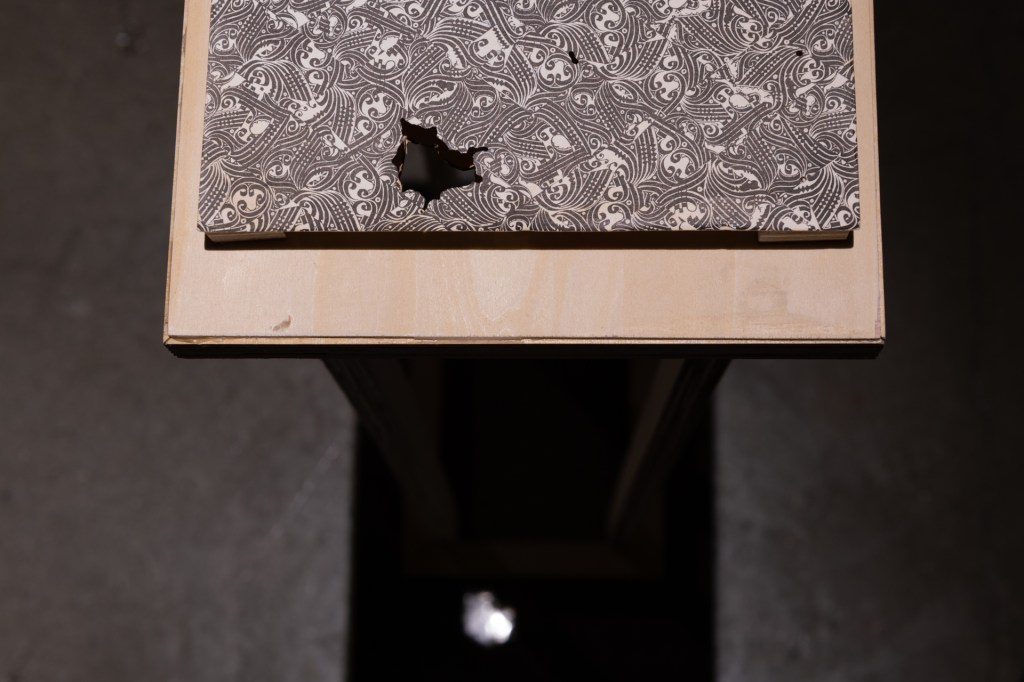

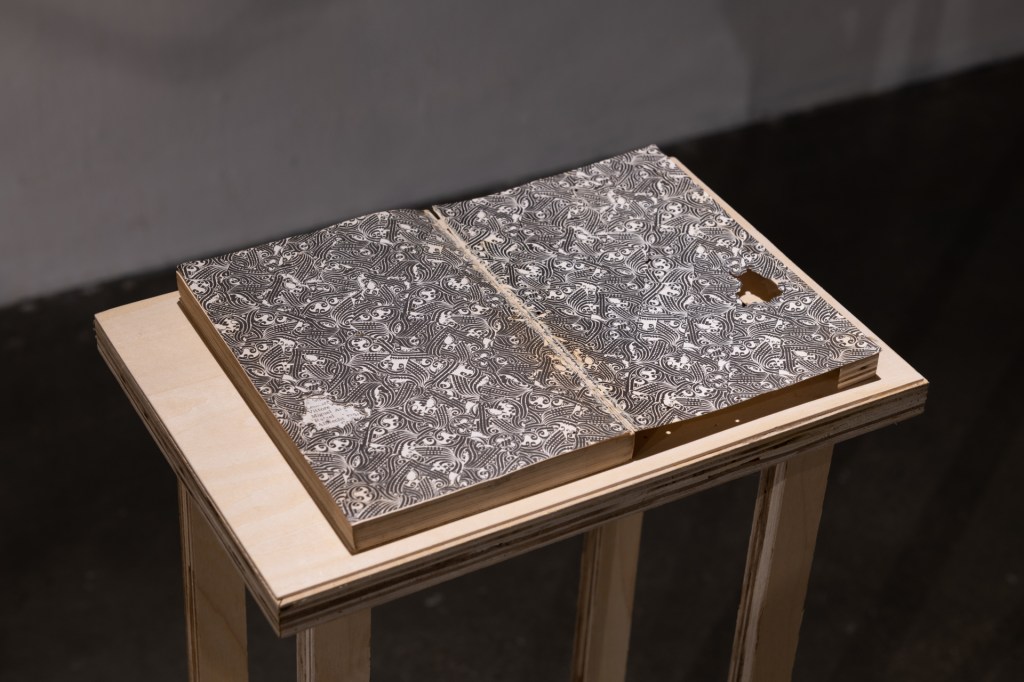
a worm that ate the catalog back cover to escape the european painting tradition
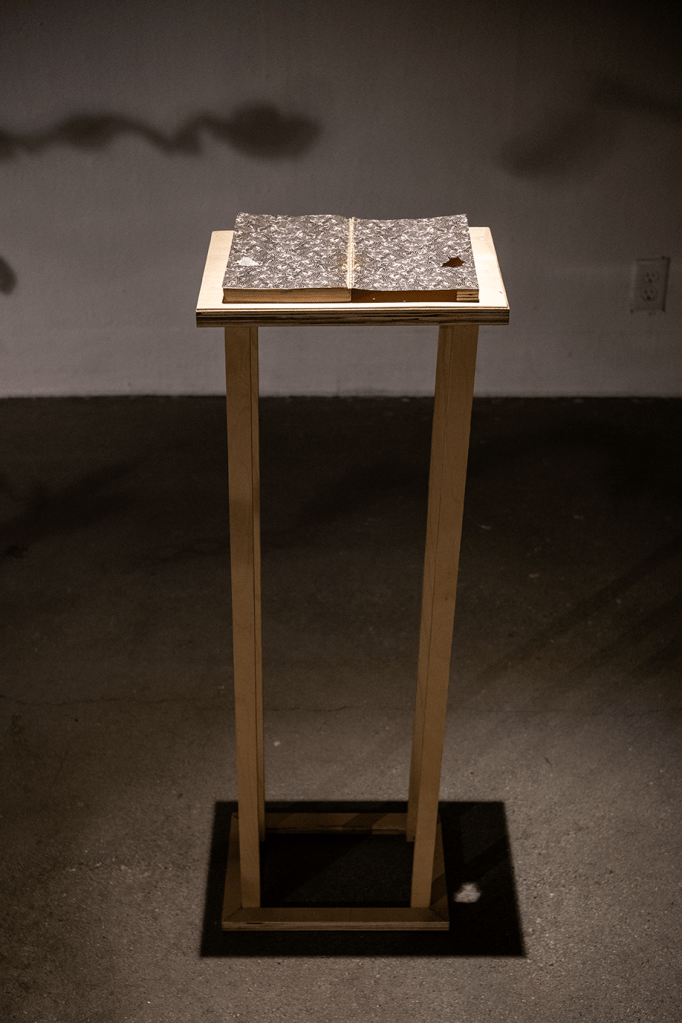
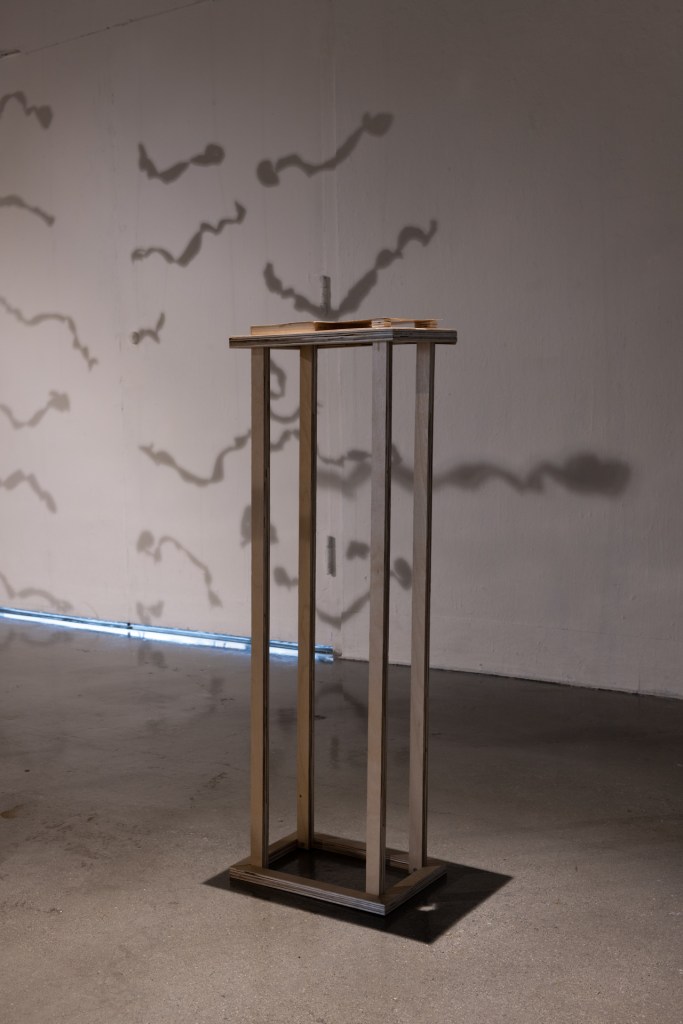
found object, pedestal
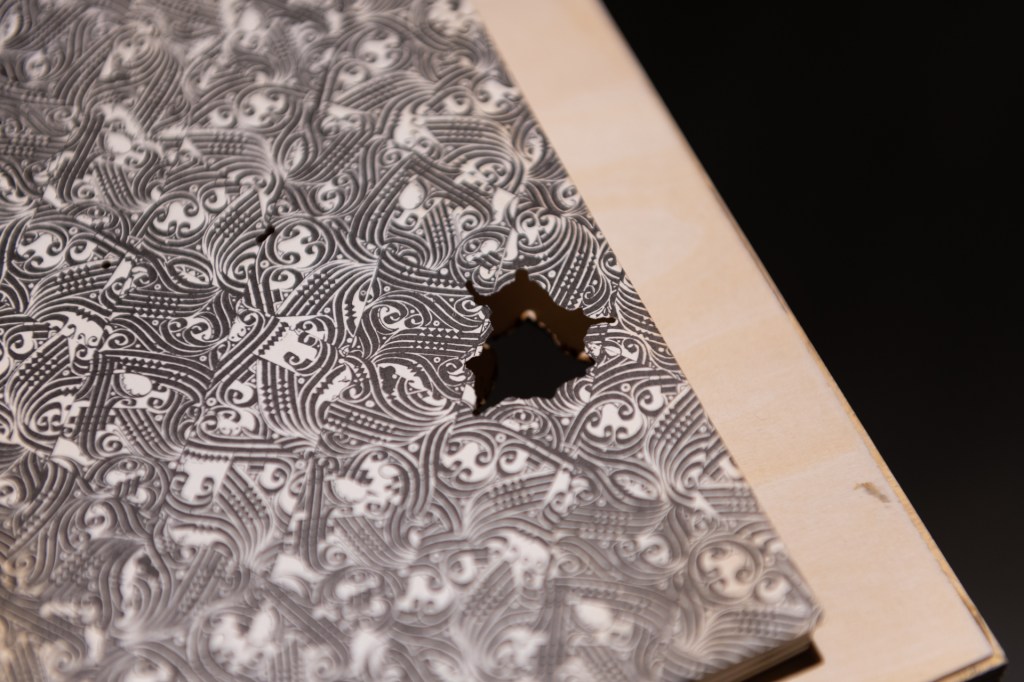
This work is an unexpected collaboration with a moth. The book has a topographic form on its back cover, eaten by this moth that is unaware of its content.
Perhaps the moth’s strategy can enlighten us – how to create your own space, your own piece of land, out of your current reality.
It is displayed on a specific pedestal that replicates the cut in its upper part, creating a small shadow on the ground.
uma traça que comeu a contracapa do catálogo para escapar da tradição da pintura europeia
livro apropriado, pedestal
Este trabalho é uma colaboração inesperada com uma traça. O livro apresenta uma forma topográfica em sua contracapa, comida por essa traça que não está ciente de seu conteúdo.
Talvez a estratégia da traça possa nos iluminar – como criar seu próprio espaço, seu pedaço de terra, para fora da sua atual realidade.
Ele é exibido em um pedestal específico que replica o corte em sua parte superior, criando uma pequena sombra no chão.
 amanda teixeira